This is a good one! And hopefully it’s only going to get better.
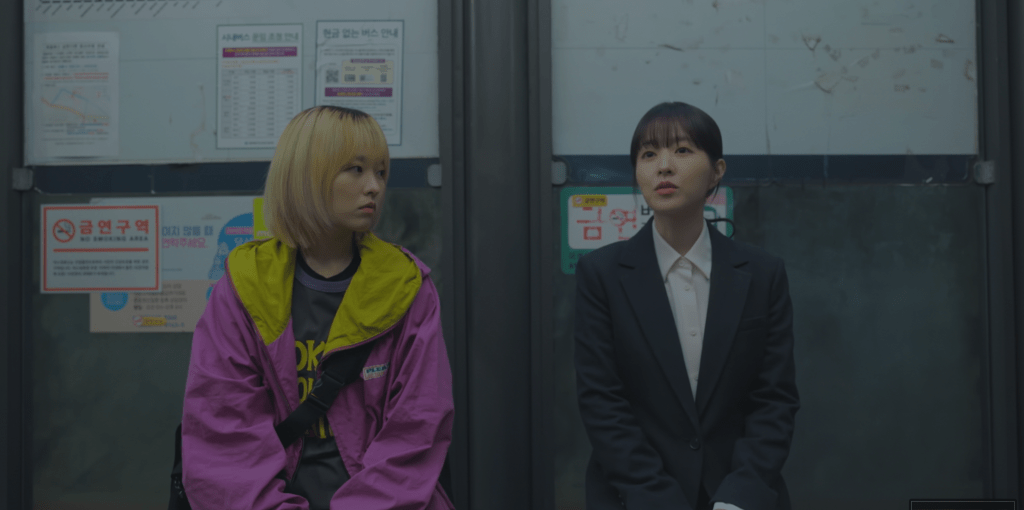
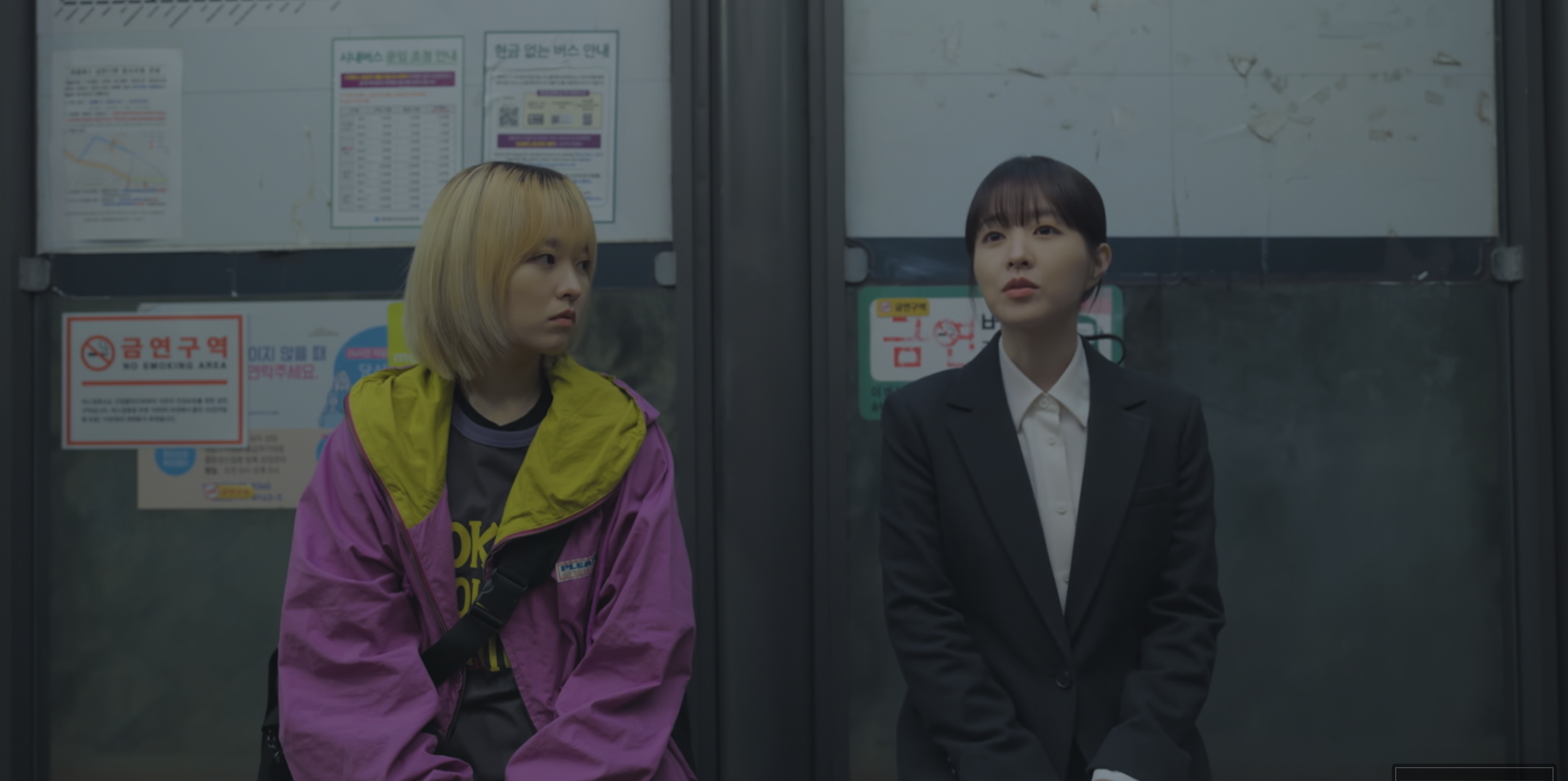
As a long-time Park Bo-young fan, I knew I had to check this one out. Her newest drama “Our Unwritten Seoul” just recently premiered this past weekend and it stars Park Bo-young playing twin sisters, Yoo Mi-rae and Yoo Mi-ji. In an attempt to protect and save her sister’s life, Mi-ji switches identities with Mi-rae and the two sisters pretend to be each other. In the process, they learn more about each other’s lives and what the other person has been going through this entire time. Rounding out the cast is Jin-young who plays Lee Ho-su, Mi-ji and Mi-rae’s high school friend who’s now a lawyer at a big law firm. Ryu Kyung-soo portrays Han Se-jin, a farm owner who hires Mi-ji to work part-time for him and ends up interacting with Mi-rae instead.
I remembered my initial shock and hesitation when I saw that the first episode was 1 hr and 20 minutes. I could barely do 1 hour episodes anymore so to watch a first episode that would last for 1 hr and 20 minutes? I wasn’t so sure if I could do it. But after settling into the first episode, I realized that each minute was put to good use and that the drama did a wonderful job in maximizing all the time that was given. It never felt like there was any filler in the episode; everything flowed smoothly and made sense. I wouldn’t say that the first episode flew by quickly but I also never felt like it was too slow. The pacing felt just right and had just enough momentum to keep you engaged and interested the entire time. It took its sweet time in setting everything up and you never felt as if things were rushed.
The premise of the drama centered around twin sisters Mi-ji and Mi-rae swapping identities and living each other’s lives and the drama needed to sell you on this concept in a way that was convincing and fun. And maybe that’s why the first episode was a whole hour and twenty minutes. It needed the entire hour and twenty minutes to get you to buy in on the story. The drama used the entire first episode to lay out the foundation, show you the backstory of our characters, give you time to get to know the characters without overwhelming you with too much information, and set up the foundation before the identity swaps. It’s safe to say – the drama did all of that and more.
Mi-ji’s story is so interesting and relatable because she’s someone who wears her heart on her sleeves. She’s expressive, funny, and outgoing. Unlike her sister Mi-rae who went on to earn a good-paying job at a good company, many people looked down on Mi-ji and constantly compared her to Mi-rae, including her own mom. There was a sense of insecurity and embarrassment that came from that but Mi-ji also had a level of pride. She noted that she also worked and made money and helped her mom pay living expenses. She pointed these things out to feel useful and to feel as if she was contributing somehow as well. Both Mi-rae and Mi-ji’s stories are relatable and I think people will be able to resonate with both characters. For Mi-ji in particular, I think it’s her way of just taking it day-by-day and wandering about in life without any set plans in stone that people will empathize with. As someone who graduated high school and moved from job to job, she didn’t really have any real sense of stability. Just like her name implied, her life was full of uncertainty and “unknown.” You sympathize with Mi-ji because even though she’s not as well off financially or professionally, she’s a good person with a good heart who cares for her family and loved ones. She got injured back in high school which derailed her dreams and goals of becoming a successful athlete. She also had to pause her life to take care of her sick grandma in the hospital. The constant comparisons between Mi-ji and Mi-rae also spoke volumes about the concept of “success” and what society deems as successful or not. Because Mi-ji only graduated high school and didn’t have a stable job, she was perceived as someone who wasn’t successful. There’s this societal pressure and expectation to graduate college, to get a good-paying job at a good company, to get married and start a family, and to be able to give back to your parents. And if you don’t do any of that, then you’re less than. Then you’re a failure. Mi-ji is someone who put on this image of her being happy and loud and outgoing, but deep down, she felt terrible and insecure. She didn’t feel all that great about where she was in her life.
The same thing could be said about Mi-rae who was labeled as someone successful. She worked at a good finance corporation and she made a good amount of money to be able to help out the family financially. She was her mom’s trophy. She felt guilty for having been sick when she was younger so she took on the hospital debt and gave back to her mom. However, she wasn’t all that happy and content in her life because she was a victim of workplace bullying. Along with that, the monotony of doing the same thing over and over again was suffocating and overwhelming. She was lonely, reserved, and private and she didn’t share how she was really feeling to anyone, even to her own sister. She was depressed and suicidal and she wanted to end her life. Once again, Mi-rae’s story spoke volumes about societal expectations and pressure: she makes money, she works at a good company, she can support her family – the expectation is that she should be feeling good and happy about her life, right? And it was because of this pressure that she felt like she couldn’t open up to anyone about her struggles. She felt as if she had to hold up this image and reputation of being the “perfect” or “ideal” daughter – for both her own sake and her family’s sake.
And when Mi-ji and Mi-rae switched identities and swapped lives with each other, they learned that they had been withholding information from each other and that there was so much more going on that they had no idea about. When Mi-ji applied to work at Se-jin’s farm, she wrote on her resume that there was more than what meets the eye. That was the case with Mi-ji and Mi-rae’s lives where the twin sisters came to learn just a little bit more about each other’s lives once they switched places. Mi-ji may seem strong on the outside but she too had her own struggles. Mi-rae was dealing with the whistleblower incident that Mi-ji only learned about thanks to Ho-su who discussed it with her. What more is there that both sisters don’t know about just yet? What other things are they going to learn along the way? What more are Mi-ji and Mi-rae enduring and not telling each other?
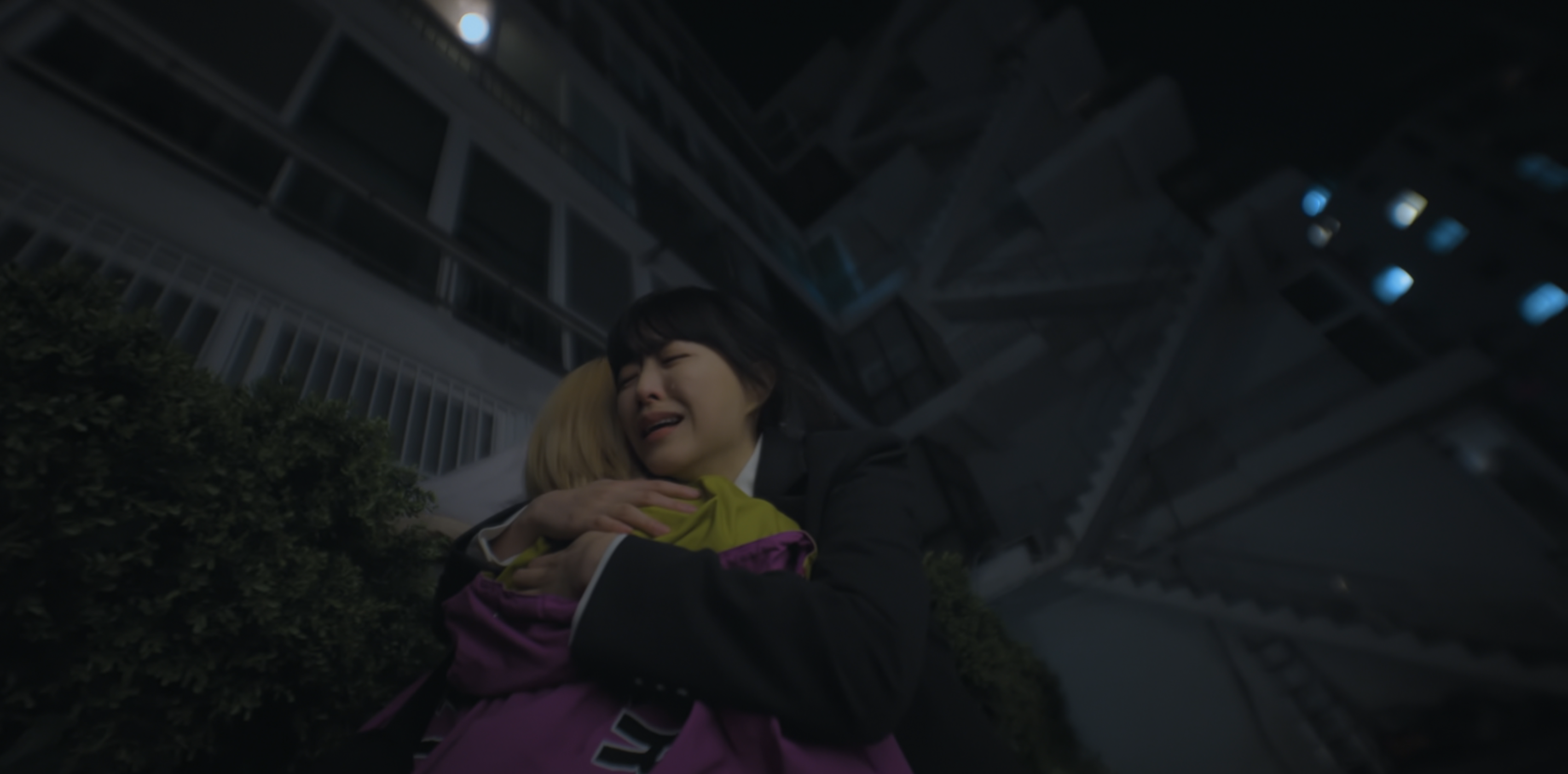
Because episode 2 proceeded with the identity swap, episode 1 really needed to sell you on Mi-ji and Mi-rae’s stories and how overwhelming and bad it was for Mi-rae that Mi-ji stepped in to help her. The cafe scene where Mi-rae was rambling about her suicidal thoughts and ideas was dark and heavy and I was not expecting it to get that grueling. But really, it was the scene where both sisters fell over from the building and onto the ground that stood out to me. In a way, that scene felt like the climax of not only episode 1 but also the first 2 episodes. That scene needed to be well done and executed and was incredibly important. The scene needed to get it right. And sure enough, it did. It served as the catalyst that pushed Mi-rae and Mi-ji to agree to swap identities and switch lives. It sold the audience on Mi-ji’s honest and real thoughts on losing her sister and how she would feel if Mi-rae was to die. In that scene, we learned that Mi-ji was afraid to lose her sister. She wouldn’t have been able to live with the guilt of not picking up on her sister’s emotional decline and silent cry for help. She wouldn’t have been the same ever again if she was to lose her precious sister even if they drifted apart over the years. That scene was so good and well done (and of course, a big part of that was due to Park Bo-young’s stellar acting!).
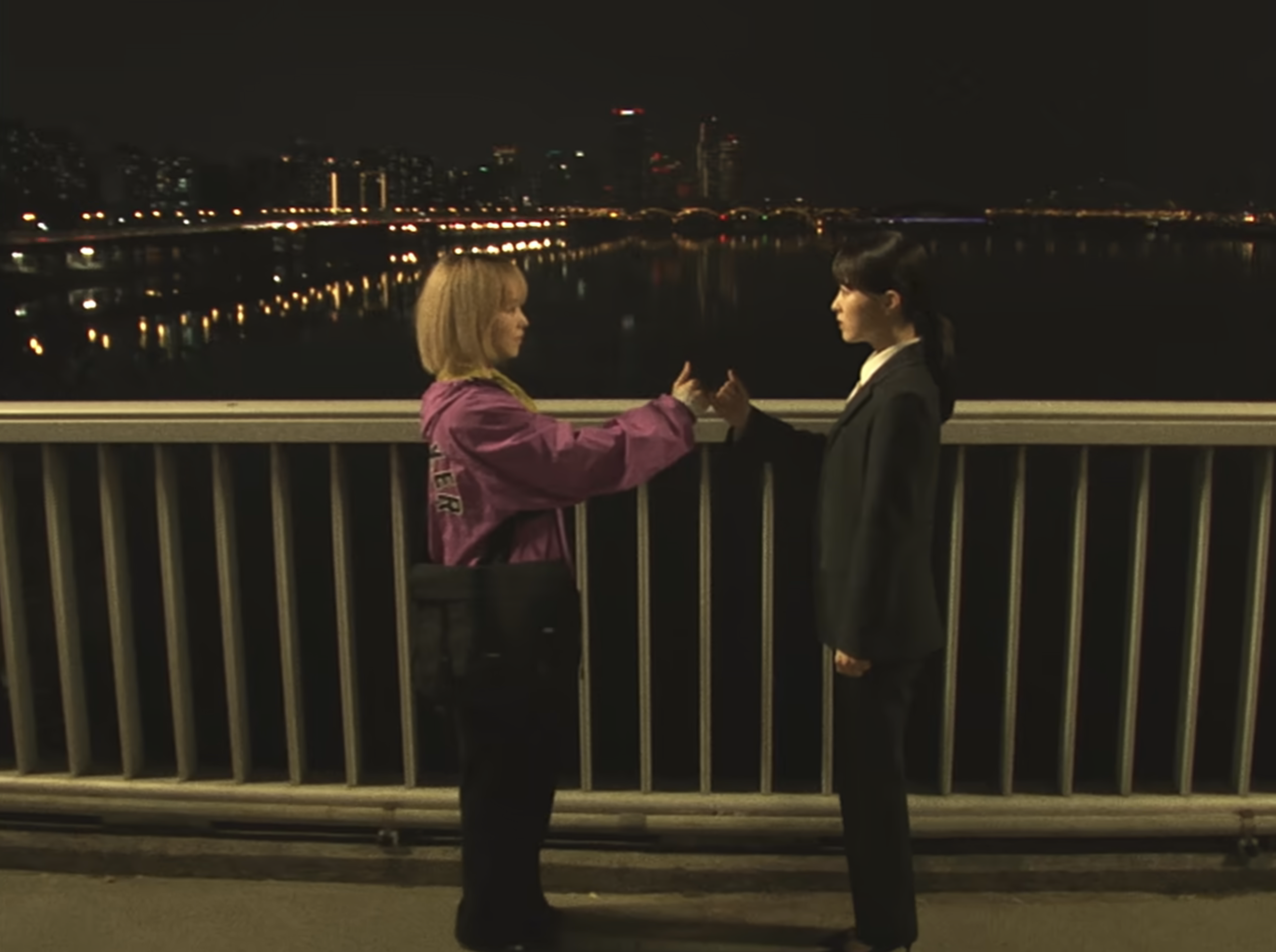
Other aspects about the show that I enjoyed included the use of music as well as the comedy. I was initially a little hesitant and unsure about how experimental and quirky some of the directing and camerawork felt but I think having the use of music to set the tone throughout the episode was great. As an example, I really enjoyed the ending of episode 1 in the way that it not only brought everything full circle (the twin sisters used to swap identities when they were younger and then they would swap identities again as adults) but also with the way that the OST track played in that scene. The timing when the OST track started to play during the scene came in at a great time and it’s moments like this where I appreciate the use of music to elevate a scene even more. Because Mi-ji and Mi-rae pretend to be each other, this drama is also all about the details. Whether that’s Mi-ji’s freckles or the way that young Mi-ji flops around on her bed and how similar it is to adult Mi-ji flopping around on the bed, this drama is careful and intentional with the way that it presents itself. Another detail that I thought was really cool was the way that the drama showed how harsh and cruel Mi-rae’s workplace was. All the computers at the desks were laid out with the company’s logo and all the desks were stationed right next to one another. The visual representation of singling out Mi-rae’s desk as the only one in the front and showing everyone else’s computers and desks as the exact same was haunting.
And like I mentioned earlier, I’m glad that this drama isn’t too depressing, devastating, and heartbreaking. There’s some adorable moments of romance as well as some humor sprinkled in throughout the episodes to help brighten things up (Mi-ji’s first few days in the office pretending to be Mi-rae was so funny!). And last but not least, there are moments that are emotional and touching, such as the scene with Mi-rae and her grandma at the hospital. I cried watching their interaction. Grandma truly knows her grandchildren the best; she knew that it was Mi-rae and not Mi-ji who came to visit her. Then she comforted Mi-rae when Mi-rae felt as if she was displaying weakness by running away but Grandma reassured her by adding that Mi-rae did well. Her running away wasn’t a sign of weakness but rather a sign of strength. She did what she had to do to stay strong (this scene made me miss my own grandma so much 😦 ). Another scene that I really enjoyed was when Mi-rae (pretending to be Mi-ji) stood up for herself against Se-jin. Back at her job in the finance corporation, Mi-rae couldn’t stand up for herself and had to bite her tongue and stay quiet but in this scene, she was brave enough to express her thoughts. It was as if she was finally able to say everything that she wanted to say in this moment and unleashed all of that anger that she had kept inside this entire time. But at the same time, everything that she said in that moment with Se-jin was true and applicable to the situation and it was so eye-opening to see this side of Mi-rae.

I’m such a sucker for dramas like “Our Unwritten Seoul” where the concepts, messages, and themes are hopeful and encouraging. As a character-driven drama, we watched as our characters went about their daily lives, surviving but not thriving. Living but not enjoying life. Barely staying afloat. Although it was heartbreaking to see just how much Mi-ji and Mi-rae were silently suffering in their own lives, you could also feel as if there was this underlying sense of hope in between all of the sadness and emptiness. In a way, the drama stayed true to its title – you don’t really know what’s going to happen next and things still remain “unknown” (what kind of adventures will unfold with Mi-rae and Mi-ji switching lives?). But you just have a feeling that some way, somehow, in between all of the chaos and craziness, that things will ultimately work out just fine.
 MaryMeKpop
Leave a comment